
Commercial Security Assessment in Calgary: Identifying Vulnerabilities Before They Become Incidents
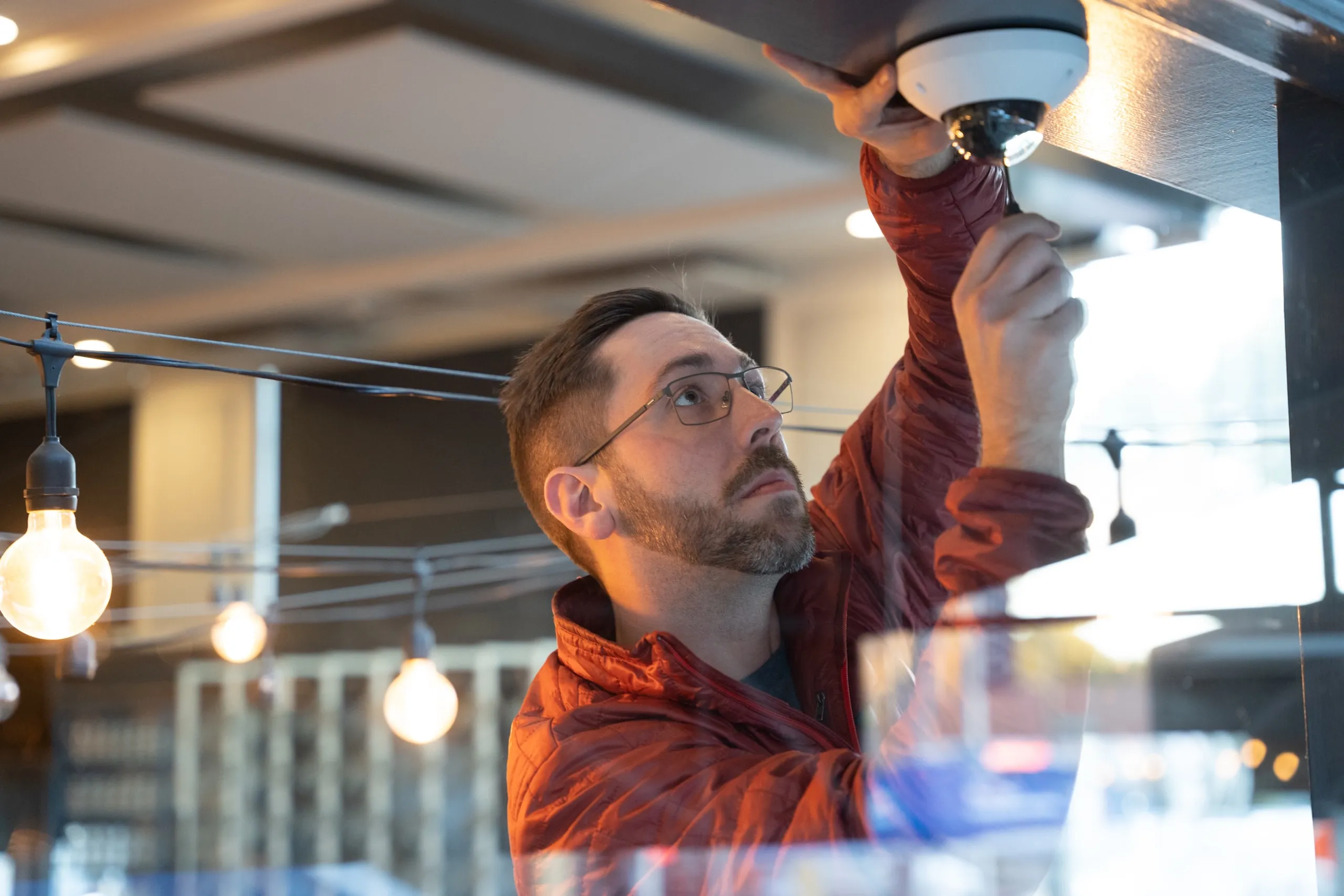
"A professional security assessment identifies the gaps in your Calgary facility's defences before an incident exposes them. Learn what's involved, what to expect, and how to act on the findings."
Most Calgary businesses don't discover the weaknesses in their security until something goes wrong - a break-in, a tailgating incident, an unauthorized access, or a compliance audit that finds documentation gaps. By then, the cost - financial, operational, and reputational - is already real.
A professional security assessment is a structured process for identifying vulnerabilities before they're exploited. It looks at your physical environment, your technology systems, your policies and procedures, and the human factors that all interact to determine how secure your facility actually is - not just how secure it looks on paper.
Key Takeaways
- Security assessments examine physical vulnerabilities, technology gaps, policy weaknesses, and human factors together.
- Many of the most significant vulnerabilities in Calgary facilities have nothing to do with technology - they're procedural.
- A formal assessment provides documentation useful for insurance, regulatory compliance, and board reporting.
- Assessments should result in a prioritized remediation roadmap, not just a list of problems.
- Reassessing annually or after significant changes ensures your security posture keeps pace with your business.
What a Security Assessment Actually Covers
A comprehensive commercial security assessment examines four interconnected dimensions:
- Physical security: Building perimeter, entry points, lighting, landscaping, parking structure access, fencing, and the physical security of server rooms, communications closets, and high-value asset areas.
- Technology systems: The coverage, configuration, and condition of existing cameras, access control readers, alarms, intercoms, and network infrastructure. Are systems recording properly? Are cameras positioned to cover all critical areas? Are access logs being retained?
- Policies and procedures: How is access provisioned and deprovisioned? What happens when an employee is terminated? Who has authority to add credentials? Are there documented incident response procedures?
- Human factors: How do employees actually behave - do they hold doors for unknown individuals? Do they follow visitor management procedures? Are security policies communicated and reinforced?
Common Vulnerabilities Found in Calgary Commercial Facilities
After conducting assessments across Calgary businesses in multiple sectors, Fortified's team consistently encounters the same categories of vulnerability:
- Legacy credentials never deprovisioned: Access systems with hundreds of active credentials for former employees, contractors, and vendors who left years ago. In cloud-managed systems, this is easy to prevent; in legacy systems, it requires regular manual audits that rarely happen.
- Camera coverage gaps: Rear and side entrances, loading docks, stairwells, and parking structures with no camera coverage - often because the original system was designed around the main entrance only.
- Propped doors and tailgating: Even sophisticated access control systems fail when employees routinely prop fire doors for convenience or hold doors open for unknown individuals out of courtesy.
- No visitor management process: Visitors signing a paper log - or no log at all - with no photo capture, no ID verification, and no escort policy.
- Unsecured network infrastructure: Network switches, patch panels, and communications equipment in unlocked rooms or shared spaces accessible to visitors, cleaning crews, and contractors.
The CPTED Framework for Calgary Environments
Crime Prevention Through Environmental Design (CPTED) is a methodology that uses the design and layout of physical environments to reduce criminal opportunity. Applied to commercial properties, it considers factors like:
- Natural surveillance: Sightlines, lighting, and landscaping that maximizes visibility and eliminates hiding spots.
- Territorial reinforcement: Clear delineation between public, semi-public, and private areas - fencing, signage, landscaping, and lighting that signal who belongs where.
- Access control: Using environmental design to guide legitimate users through defined entry points and discourage unauthorized access to restricted areas.
- Maintenance: A well-maintained environment signals active occupancy and management - deterring opportunistic crime.
Calgary's cold climate creates specific CPTED considerations: lighting must account for the limited daylight hours of winter, landscaping choices affect both summer and winter visibility, and the design of outdoor waiting areas affects the security of entry points.
What to Expect from an Assessment Report
A professional security assessment should deliver more than a list of problems. The report should:
- Prioritize findings by risk level - distinguishing between critical vulnerabilities requiring immediate action and lower-priority improvements to address over time
- Provide specific, actionable recommendations for each finding - not just "improve camera coverage" but "install one wide-angle camera at the northeast corner of the loading dock to cover the blind spot between the current cameras"
- Include a remediation roadmap with cost estimates that allows budget planning
- Document the current state thoroughly enough to serve as a baseline for future assessments
Using Assessment Findings for Insurance and Compliance
Security assessment documentation has value beyond the physical improvements it drives. Insurance underwriters increasingly ask about formal security assessments as part of commercial property and cyber liability underwriting. A documented assessment demonstrating active risk management can support both coverage decisions and premium negotiations.
For regulated Calgary businesses - healthcare, financial services, energy sector - security assessments also support compliance documentation requirements under applicable regulations.
Fortified Technologies conducts comprehensive security assessments for Calgary commercial and industrial facilities. Contact our team to discuss what an assessment would involve for your facility.
Frequently Asked Questions
A professional security assessment examines your facility's physical vulnerabilities (entry points, lighting, sight lines), existing system performance, operational procedures, and compliance obligations. The output is a prioritized list of recommendations with implementation costs.